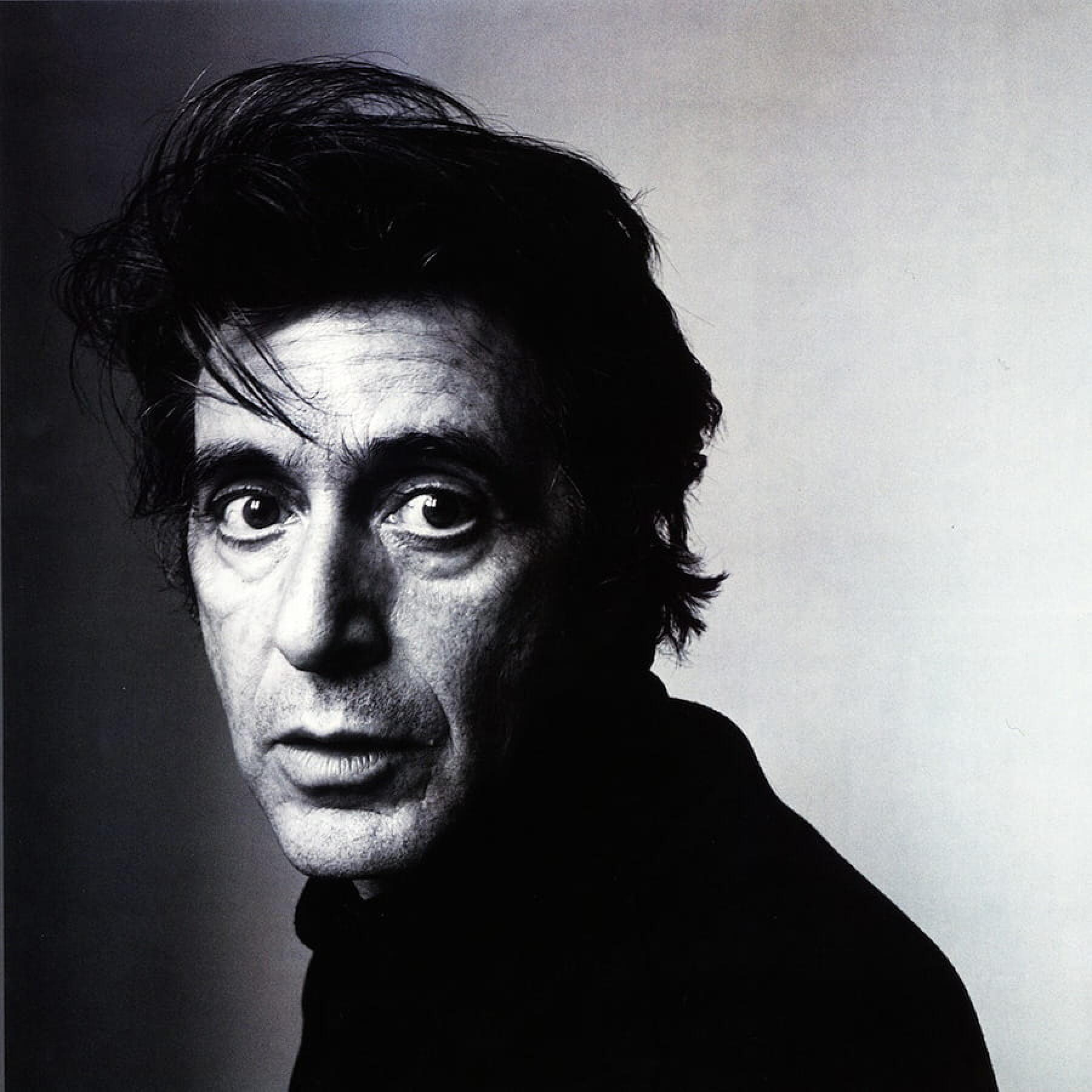
When we think of Irving Penn, we often think of Vogue, of fashion, of elegance. That’s true. But one of Penn’s most striking photographs is neither a couture gown nor a celebrity. It’s a cigarette butt.
I remember very clearly the first time I really looked at it.
Not glanced at it, not quickly understood it—looked. The way you stop without quite knowing why. It was nothing, really. A crushed, twisted, almost dirty cigarette end. And yet, it was impossible to move on. There was something there, a kind of quiet insistence.
Something that said: stay.

For a long time, I thought Penn belonged to the realm of control. Of perfection. Of images so precise they become almost intimidating. Impeccable compositions, neutral backgrounds, light that never spills over. Everything seemed held at a distance.
That was probably too easy a way to place him.
Born in 1917 in New Jersey, trained in design before turning to photography, Penn joined Vogue in the early 1940s. He would remain there for decades. A rare kind of loyalty, almost difficult to imagine today. But in his case, it never feels like routine. It feels like a field of exploration.
His first cover for the magazine, in 1943, already sets the tone. A still life. No face, no social scene. Just objects, arranged with a kind of quiet precision. As if, from the very beginning, he refused the obvious.
He never stopped refusing it.
The longer you stay with his images, the more something shifts. It’s not cold. It’s not distant. It’s contained. And that containment takes time.
Penn is not a photographer of the instant. He works on construction. He prepares, simplifies, removes. He builds a space in which the subject has to exist differently.
What’s striking is how reduced that space is.
A backdrop, often. Sometimes two walls meeting at a corner. Nothing to distract, nothing to embellish. And yet, within that almost nothing, everything becomes visible. A posture, a hesitation, a way of holding oneself—or no longer knowing how to.

His corner portraits have become iconic. They are often discussed as a formal device. But what interests me is not the idea. It’s what it does.
Bodies don’t quite settle at first. Eyes look for an exit. And then, gradually, something gives. Social gestures begin to crack. What remains is a presence—more exposed, sometimes slightly off-balance, sometimes unexpectedly solid.
You think of the writers, painters, and anonymous figures he photographed around the world. Not only in New York or Paris, but in Peru, Dahomey, New Guinea, during travels in the 1950s and 1960s. He places them all within the same visual space, with the same level of attention.
That is not so common.
He doesn’t look for the exotic. He doesn’t dramatize difference. He does exactly the same thing with everyone: he looks, for a long time, until something appears.
And what appears is never spectacular.
It’s a density.
A way of being there.
Within the history of photography, that position mattered. It opened a path. You think of Richard Avedon, often seen as his opposite—more mobile, more frontal, more overtly narrative in his portraits—yet he acknowledged what Penn had established before him: a stripped-down space, a direct confrontation, no escape. Where Avedon would later bring movement and visible tension, Penn had already installed silence and rigor. Two different languages, but the same decision to remove the background and face the subject.
His relationship with Lisa Fonssagrives—dancer, model, and later his wife—also runs through his work. She appears in some of his most well-known images. But again, nothing anecdotal. She is not just a model. She is a presence he builds with.
Something precise, balanced, almost architectural.
That same tension runs through his fashion work, even if at first glance it might seem otherwise.
The images for Vogue are almost irreproachably elegant. The garments, the lines, the textures—everything is controlled. But if you stay a little longer, you see that the bodies are not there to seduce in any conventional sense.
They support the structure.
Clothes become forms to inhabit, almost like architecture. The models are not decorative. They are necessary to the balance of the image. Once again, something is held back, restrained, prevented from slipping into effect.
That is probably why these images have not aged like others. They do not depend on an era, but on a way of seeing.
And then there are his still lifes.

The same method, the same patience. Simple objects, sometimes damaged, sometimes precious. Skulls, bottles, remnants, fragile arrangements. Nothing spectacular at first.
And yet, everything becomes charged.
In the 1970s, when he began photographing cigarette butts picked up from the street, the gesture could seem surprising. He wasn’t trying to provoke. He was simply continuing to look where we no longer do.
The cigarette butt becomes surface, matter, almost landscape.
I often wonder whether Penn was looking for beauty. I don’t think so—or not directly. He was looking for something more precise, harder to name.
A kind of rightness.
Something that holds without explaining itself.
That requires a particular discipline. A way of resisting the urge to add, to embellish, to seduce. Accepting that an image builds itself slowly, almost in withdrawal.
It’s a demanding position, and today, almost a countercurrent.

We are surrounded by images that try to capture instantly, to convince, to please. Penn does the opposite. He slows things down. He simplifies. He leaves space for the gaze to settle.
And at first, that space can feel empty.
Then it becomes necessary.
I think that’s where his work continues to act. Not only as an aesthetic reference, but as a way of positioning oneself in front of the world.
To look without hierarchy.
To give time.
To accept that not everything is immediately given.

The cigarette butt, in the end, is not a marginal detail in his work. It’s almost a quiet summary. A way of saying that nothing is too small, too worn, too insignificant to deserve full attention.
As long as we truly look.
Since spending time with Penn’s images, I find myself doubting my own photographs differently. Less about their impact, more about their structure. Does it hold, without artifice? Does something resist the gaze?
The answer is not always comfortable.
But it is useful.
And sometimes, on a street corner, in front of something I would once have ignored, I stop a second longer.
Not to make a picture.
Just to see.
As if, somewhere, Irving Penn were still at work.
Grégory Herpe


Leave a Reply