
It was in Perpignan, in September 2008. I was showing my work at the festival Off — that parallel and vital space where independent photographers build their own visibility, outside the official circuits of Visa pour l’Image. That’s where I first met Aga Łuczakowska. She had just finished a masterclass in Italy with Stanley Greene — one of the most committed photographers of his generation — and she already carried, in the way she talked about her images, something few photographers her age possessed: a genuine awareness of what she was looking for.
What she was looking for was atmosphere. Not the event. Not the information. Not the proof. The atmosphere.
Aga Łuczakowska was born in 1981 in Silesia, that industrial region of southern Poland that has forged as many artists as engineers. She first completed a master’s degree in environmental management at the University of Silesia in Sosnowiec — a detail that is far from trivial: geography, the reading of territories, the way societies inhabit and transform their space, all of this runs deep through her work. One day, she brings her first photographs to a local newspaper. The next day, she is a freelancer. A year later, a staff photographer. The trajectory is swift, but speed is not what matters — direction is.
Because Aga never stays long in one place, she travels a lot, as if to draw inspiration from the world. Then comes Bucharest, which she makes her own for years. This mobility is not photographic tourism: it is a method. She goes where something resists simplification, where the dominant images lie by omission.
Istanbul, Women, and Received Ideas
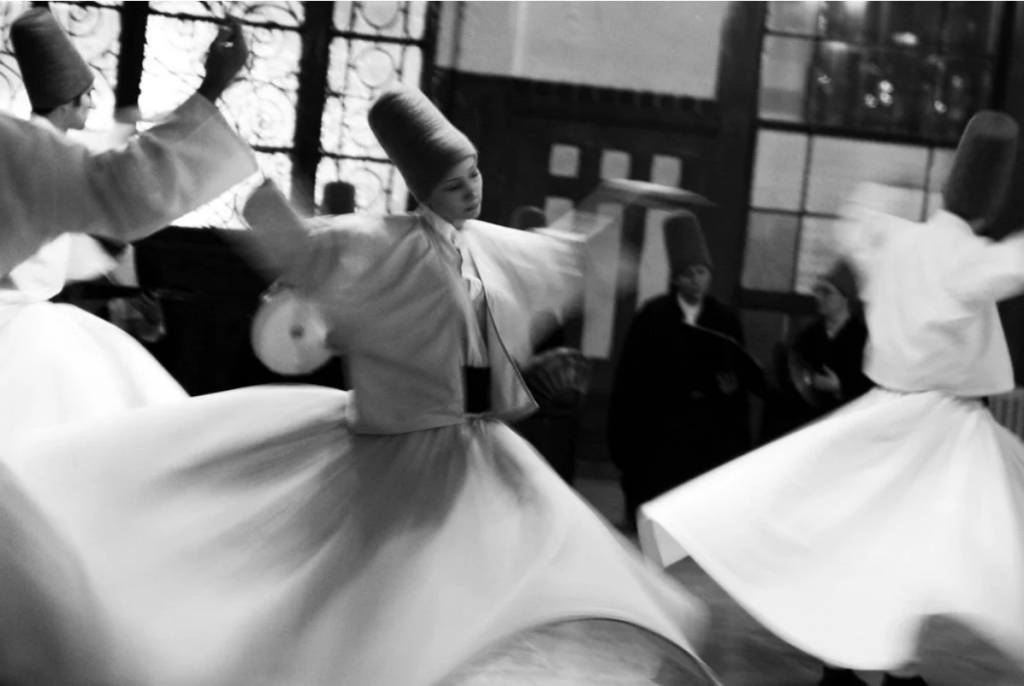
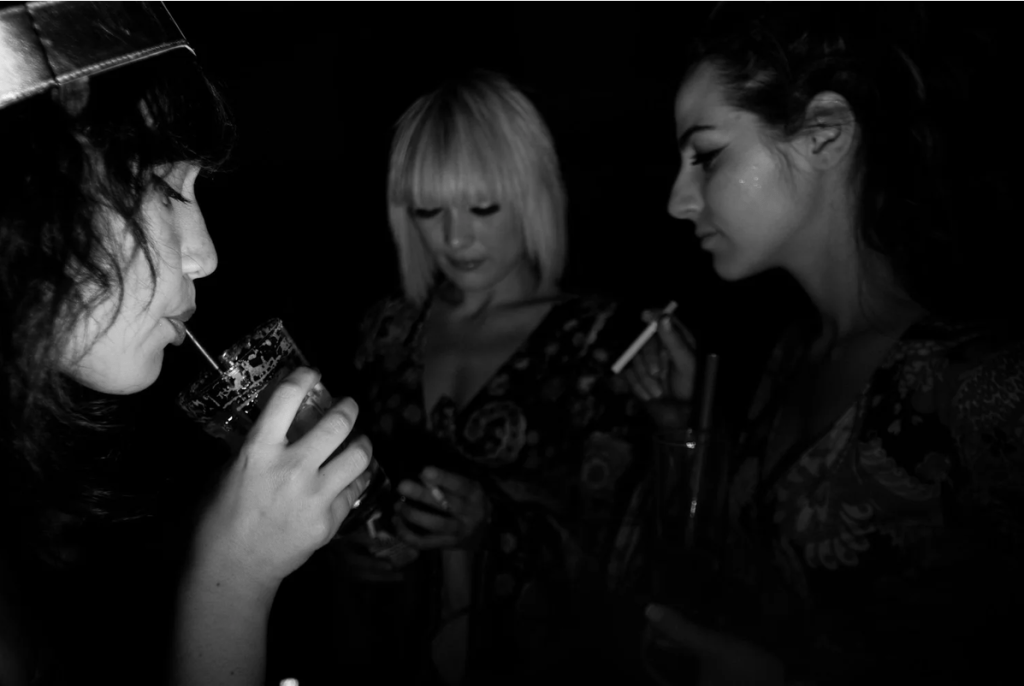
The project Female Islambul, made in Istanbul between 2006 and 2007, illustrates this perfectly. Aga arrives laden with the usual European assumptions about Turkey: conservatism, uniformity, constraint. What she finds is radically different. Istanbul is the only metropolis in the world to straddle two continents, and that duality is not merely a geographical metaphor — it structures lives, bodies, identities. Aga photographs young women skating in Kadıköy, others praying in the women’s section of a mosque, dervishes, participants in the Ashura commemoration, a couple embracing on the shores of the Bosphorus with the inscription “Seni seviyorum” — I love you — in Turkish written on the wall behind them. The headscarf stands alongside a night out in Taksim, faith alongside freedom, and none of these images pretends to resolve the contradiction: it shows it, it lets it breathe.
That same year, at the Monferrato masterclass with Stanley Greene, the series Faith in Faith emerged — a more abstract, more tense exploration of belief as a source of meaning and as a tool of control. The dialogue with Greene, a NOOR photographer and major figure of engaged photojournalism, clearly left lasting marks: an ethical rigour in the choice of subjects, an attentiveness to the political hidden beneath the everyday.
Stanley Greene, whom I came to know a little later, in 2017, and who gave me such judicious advice about my work in Cambodia on the schooling of young girls and paedocriminal networks. A strange character, Stanley. But a formidable professional.
Bucharest, or the Poetry of Concrete
But it is perhaps in Bucharest that Aga Łuczakowska found her most fertile territory. Two projects in particular deserve close attention.
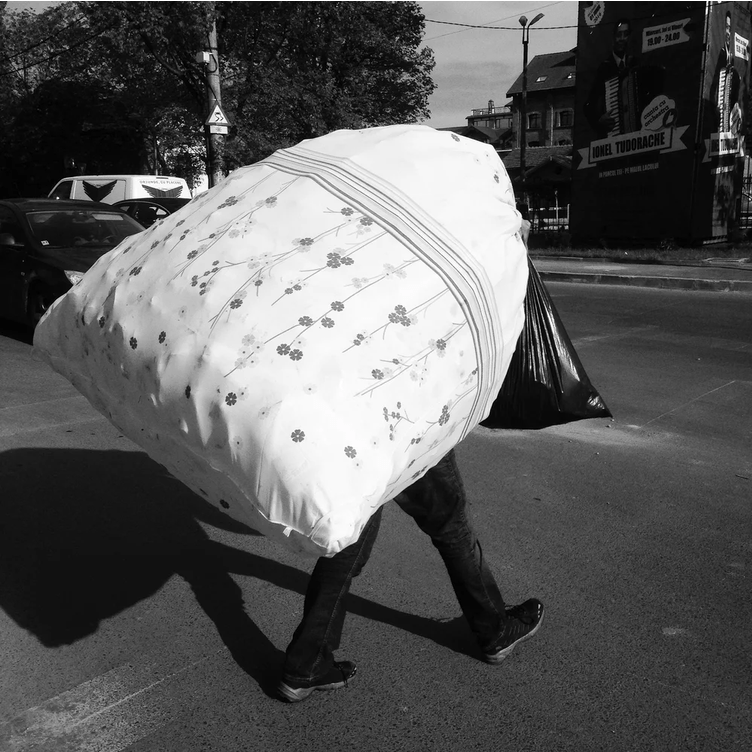
Râsu’-plânsu’ — “laughing through tears” — is a Romanian expression that captures in itself the full complexity of that country. Under Ceaușescu, between 1974 and 1989, hundreds of villages were destroyed and their inhabitants forcibly rehoused in the large housing blocks on the outskirts of Bucharest — the blocuri, those uniform tower blocks designed to erase local identities and replace them with an imposed collective one. What Aga photographs is the response of those residents: enclosed balconies, repainted facades, improvised flower boxes, makeshift barriers marking the boundaries of home. These tiny, tenacious gestures are proof that the individual always resists the architecture of control. The project was exhibited at Bucharest Photo Fest in 2025, then at the Abuja Photo Festival in Nigeria, and was selected by Der Greif — one of Europe’s most demanding photography publications — for an Artist Feature accompanied by the Face-to-Face Award.
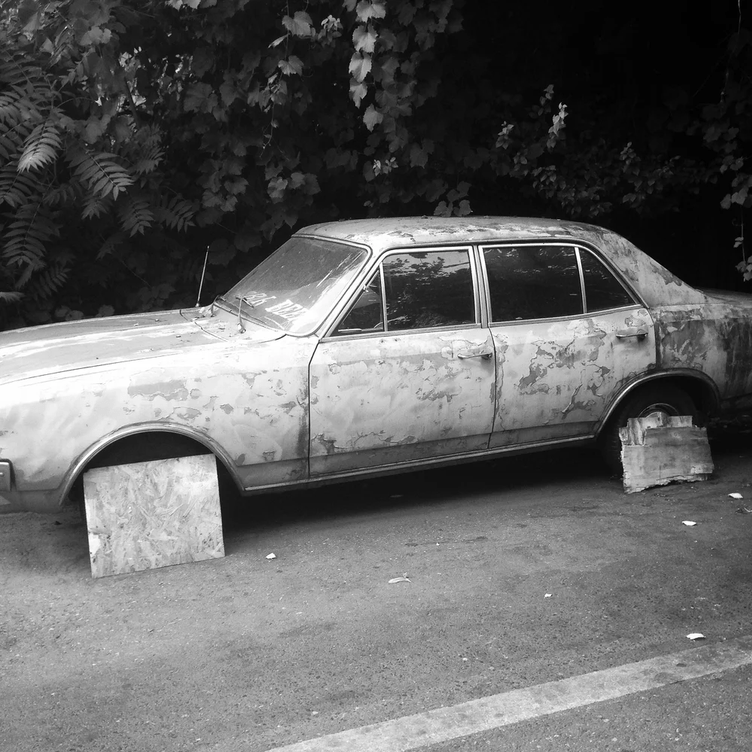
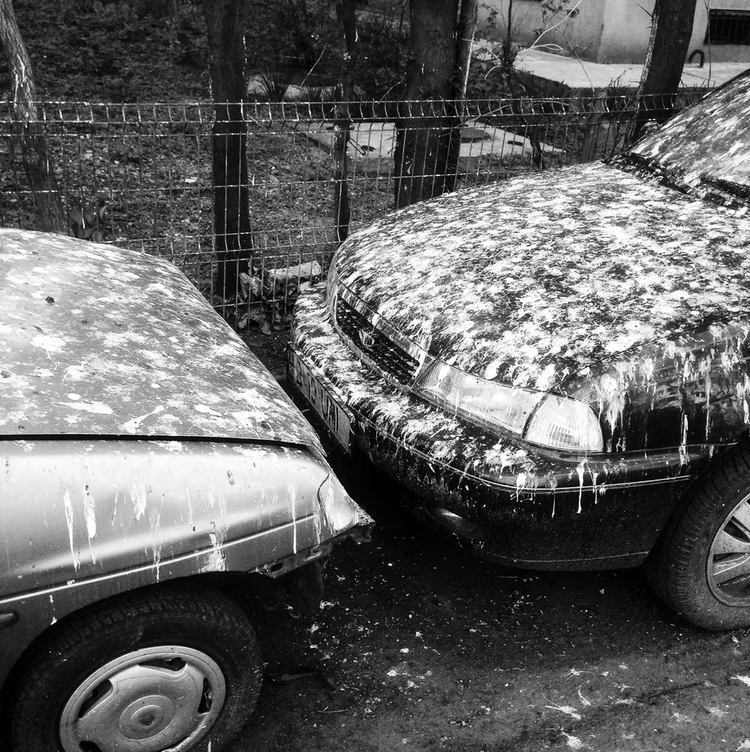
Sculptures of Everyday Resistance pushes this intuition even further. In the streets of Bucharest, ordinary objects — chairs, crates, stones, water bottles — are placed at the edge of parking spaces to hold them in their owner’s absence. These anonymous, fragile devices, Aga photographs as if they were sculptures. And in their way, they are: compositions born of necessity, carrying form and character. The reference to Constantin Brancusi, who photographed his own sculptures in his studio as works in their own right, is not decorative — it says something profound about the way Aga looks: with the same attention given to what art history remembers and to what it forgets. The World Photography Organisation named one of these images Entry of the Week in the Sony World Photography Awards 2026. The jury wrote that these images bear witness to “compelling visual narratives found not in chaos and noise, but in moments of profound solitude.”
The Silence, and the Return
In 2018, Aga Łuczakowska stops. Not by artistic choice, but by human necessity: ill loved ones, years of care, of presence, of invisibility. Seven years without photographing. In a world where continuous production is often confused with legitimacy, that silence could have been fatal. Instead, it proved foundational.
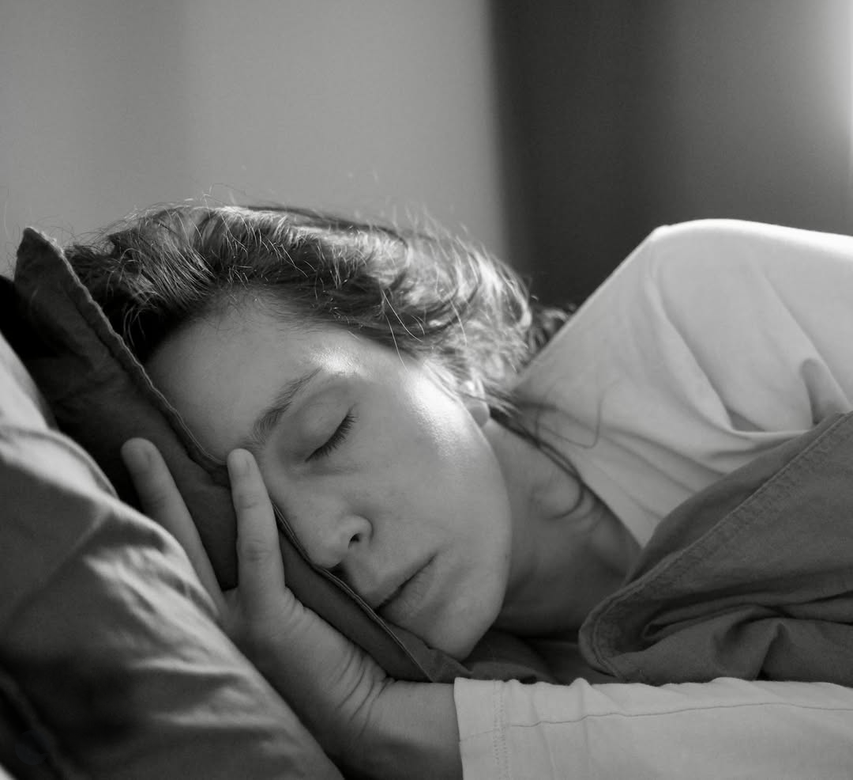
When she picks up her camera again in mid-2025, something has changed. She writes it herself: “I started as a press photographer, working with clear stories and deadlines. Over time, I moved away from that structure. My images no longer precisely describe reality: frames can take any orientation, people are not required, and photographs may surface years later. I work in an intuitive way.”
This return is immediately noticed. In 2025, she receives the Dear Dave Fellowship — among the top 40 portfolios selected from 795 submissions, by a jury including Jody Quon (New York Magazine), Phil Taylor (George Eastman Museum), Diane Smyth (British Journal of Photography) and Robert Morat (Robert Morat Gallery, Berlin). She wins first prize in the international competition Industrial Traces — a jury chaired by Rodrigo Abd, two-time Pulitzer Prize winner, and Fabio Bucciarelli, Robert Capa Gold Medal recipient. In April 2026 she publishes her first book, Râsu’-plânsu’, self-published, reviewed in the archives of the photography journal Kwartalnik Fotografia. And in 2026, she exhibits alongside Marina Abramović, Ai Weiwei, Roger Ballen and Jacob Aue Sobol in the group show LOVE organised by ART-ICON in Paris.

The trajectory of Aga Łuczakowska is that of a photographer who never sought a career — she sought the truth of places and people, with rare patience and absolute freedom from fashion. She moved through press photography, documentary work and contemporary art without ever letting herself be confined to any one of those compartments. She took a long pause, and she came back stronger.
In Perpignan in 2008, I didn’t yet know all of this. I only knew that she looked at images differently. That’s often how it starts.
Grégory Herpe
Aga Łuczakowska’s Website: https://www.agaluczakowska.com


Leave a comment