Chas Gerretsen has lived through history, both the real kind and the cinematic kind.
At sixteen, he left his native Netherlands. He went on to hunt crocodiles in Australia and work as a cowboy in the United States, then reached Vietnam with a Minox in his pocket and one question in mind: was war anything like the movies? Between 1968 and 1970, in Vietnam and Cambodia, he worked freelance and photographed what he saw. In 1973, he stood a few dozen metres from La Moneda during the coup in Chile. He took the now-iconic portrait of Pinochet there, and the coverage earned him the Robert Capa Gold Medal.
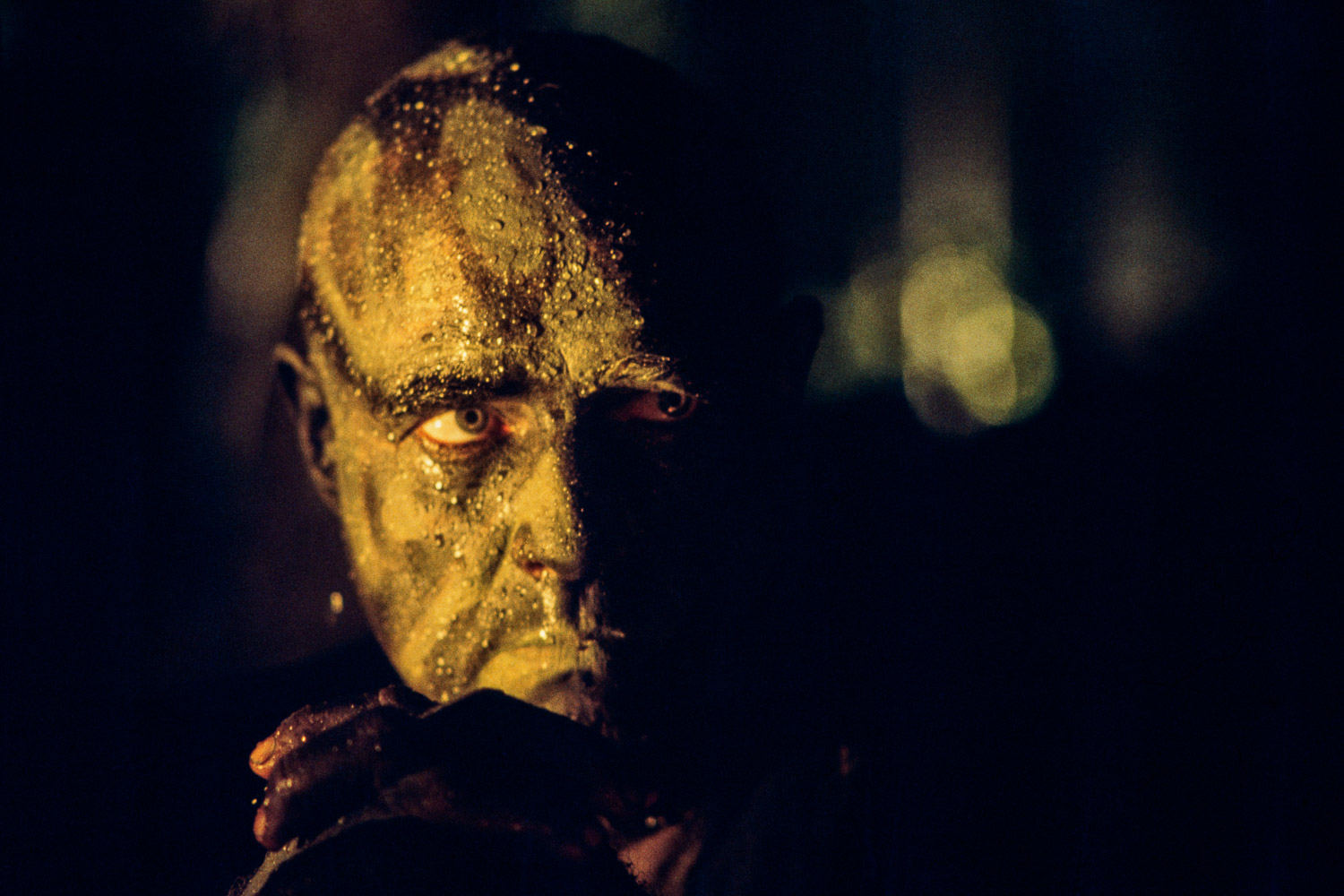
In 1976, Francis Ford Coppola brought him to the Philippines for the shoot of Apocalypse Now because he wanted a real war reporter. For months, he photographed Marlon Brando in the shadows, Dennis Hopper carrying his own Nikons, and a shoot that became legendary for its excesses. He was also the one who suggested to Coppola that a character be based on a real combat photographer. More than a hundred Hollywood films followed. Then he set sail and left it all behind for nearly thirty years. His archives were only rediscovered in the late 2010s.
For Midnight Express Magazine, Chas Gerretsen agreed to look back on this life in an exclusive interview with me. He talks about the images he never showed, the friends who didn’t make it out of Vietnam, the negatives lost at Gamma, and the line between “Real” and “Reel.” His answers are frank, often terse, always unvarnished. They come from a man for whom a photograph was never an end in itself, but a way of understanding the world.

Grégory Herpe: You left Groningen at sixteen, worked as a crocodile hunter in Australia and then as a cowboy in California before becoming a war reporter; at what precise moment did you know that photography, rather than adventure itself, would be your calling?
Chas Gerretsen: I left my hometown when I was 16 and traveled around Europe. My parents tried to stop me, but I went. My father lectured at the university, wanted me to finish schooling. When I turned 18, I immigrated to Australia. From an early age my life was based on adventure books, cowboy and war movies. I was born in 1943, during Second World War, and I wanted to find out if life was like in the movies. My parents were worried about me when I left for Australia, and I decided to send them pictures showing what I was doing and that everything was all right with me. I sent pictures of me as a cab driver, as crocodile hunter, tractor driver. Later in Texas I bought a 8mm film camera and sent even a few films home to my parents.
In Singapore, I bought a Minox-B, which I could carry in my pocket. From then on, I sent a lot more pictures home. Especially when I arrived in Vietnam I made even more photos. I learned that I could make money by selling these same pictures to newspapers and magazines; and I discovered that not only could I show my parents what I saw and experienced, but as a journalist I reached a much wider world. That’s my start as a photojournalist.
Grégory Herpe: What exactly pushed you, on a given day, to choose the Vietnam War over another subject (a desire to understand, a need to confront danger, or something else you’ve never stated publicly)?
Chas Gerretsen: I just had a desire to discover the world. I don’t think that I ever had the need to confront danger, my curiosity to find out the difference between ‘Real’ and ‘Reel’ – Hollywood movies. By immersing myself in Vietnam and later in Cambodia, I learned things about people I could only have learned through experience. I think that curiosity drove me all my life and have made me who I am.

Grégory Herpe: You’ve said you grew up hearing your father’s war stories and comparing them to Hollywood films; at what precise moment did you understand that the reality of Vietnam would resemble neither account you knew?
Chas Gerretsen: I think that very little of what I read and saw in the books and Hollywood movies of my youth have anything to do with reality. My fathers stories were much more realistic. Keep in mind, every conflict is different.
Grégory Herpe: Between 1968 and 1970, in Vietnam and Cambodia, is there an image you took that you’ve never shown to anyone, never published, and why?
Chas Gerretsen: Yes. Horror sells only in the movies.
Grégory Herpe: You’ve said you never self-censored, unlike other photojournalists in your view; can you name a specific instance where an editor or an agency refused to publish one of your Vietnam photos, and why?
Chas Gerretsen: I was freelance, not employed by one side or the other. I tried to show conflicts from ‘all angles.’ I photographed what I saw.

Grégory Herpe: What did the Vietnam War teach you about the human body, technically, that later served you as a film-set photographer in Hollywood?
Chas Gerretsen: I don’t think the war taught me anything, I think I learned from Vietnam and Cambodia. One of the things I learned is the stupidity of war, it seems that everybody’s making a buck apart from the soldiers who fight and the civilians who are the collateral damage. And regarding photography: in conflicts you have to be quick, the moment you want to record, lasts less than a second. You have to anticipate what is going to happen. See the picture before it happens, and you have to think of the story, the beginning, a middle and an end – if possible. That routine helped me enormously.
Grégory Herpe: Was there a moment, in Vietnam, Cambodia, or elsewhere, where you nearly died for a photograph that, in hindsight, may not have been worth the risk?
Chas Gerretsen: Of course, that happens all the time, it is only afterwards that you realize the stupidity of risking your life for an image that will never be published, or if published , the paper will soon litter the bottom of a bird cage.


Grégory Herpe: Have you stayed in touch, even loosely, with other photographers or reporters you crossed paths with in the field in Vietnam, and what became of them, the ones who survived that period?
Chas Gerretsen: No, I did not stay in touch, the few friends I had did not make it out.
Grégory Herpe: On the day of the coup, September 11, 1973, how physically close were you to the Moneda Palace during the bombing, and what did you do in the minutes after taking your first photograph?
Chas Gerretsen: Fifty meters? (Look at my images.) Looking for my next photograph/subject. I had already the first attempted coup in June. But I knew this time it was much more serious.
Grégory Herpe: You photographed Pinochet and his officers in 1973; did you ever have direct contact or an exchange of glances with Pinochet himself, and if so, what do you remember of that moment?
Chas Gerretsen: No we never said a word to each other. For some reason he always looked straight into my lens. In contrast with the other members of the junta who looked everywhere else then into my lens.

Grégory Herpe: After leaving the Gamma agency, more than 80,000 negatives and slides went missing, including a large part of your Chile images; do you know today, even roughly, what happened to that lost archive?
Chas Gerretsen: As far as I know, there is one French lawyer who has control over all the pictures which agencies like Gamma and Sigma have refused to return to the photographers who own/owned them. Lawsuits thus far have not helped.
Grégory Herpe: You received the Robert Capa Gold Medal for that coverage; did that recognition change your relationship to risk-taking afterward, in either direction?
Chas Gerretsen: No, I enjoyed what I was doing, and the Robert Capa award did not change that. While being a photographer I have never entered a photo competition. I traveled constantly and had no base. I also had no idea what the impact of winning awards could have on your career.
Grégory Herpe: The Museum of Memory and Human Rights in Santiago exhibited your work in 2023; what was it like seeing your own photographs hung in a place dedicated to the victims of the regime you had photographed from the inside?
Chas Gerretsen: Emotional, satisfying. The Chilean people could finally see what their grandparents had experienced. I was introduced to three survivors of the coup, at the opening of the exhibition. One victim I recognized immediately even though I had photographed the man 50 years before. It was a surprise to recognize and meet the person of whom I had believed that he had died.


Grégory Herpe: When Francis Ford Coppola called you in 1976, had you already heard about the project, and what exactly in your Vietnam portfolio do you think won him over rather than another photographer?
Chas Gerretsen: Photographs of Vietnam, Cambodia and Chile.
Grégory Herpe: You’ve said you had “no idea what awaited you” in the Philippines; what was the very first sign, in those early days on set, that this shoot would be unlike any other?
Chas Gerretsen: When I saw the Angkor Wat temple they had built. It looked real, not like a Hollywood set.
Grégory Herpe: The typhoon that destroyed part of the sets, the exploding budget, the Philippine military sometimes pulling its helicopters mid-scene to go fight real rebels; what was, for you, the moment closest to an actual theater of war rather than a film set?
Chas Gerretsen: The actual excess, the money spent, the waste, the complaining of the crew (heat, humidity, the bugs, the mud, for some homesickness, etc.)


Grégory Herpe: You only used a soundproof blimp when Brando was filming; did that restriction ever cost you a shot you particularly regret missing?
Chas Gerretsen: I bought two blimps, but It took forever to change lenses, to change film. They were a disaster to work with. That Francis allowed me to shoot between the actors’ dialogue allowed me to take some unforgettable images. You ask me if I regret missing a shot – sorry, I can’t remember something, I could not have changed, 50 years ago.
Grégory Herpe: You composed your own “scenes within the scene,” putting extras and crew members in the foreground rather than the stars; did a producer or Coppola himself ever criticize you for not photographing the lead actors enough?
Chas Gerretsen: No, they saw my images and there was never a suggestion to photograph the ‘stars’ more. The only thing Coppola said about my photography was after my one-month trial period was, “ I think you’re a good photographer, you can stay.”


Grégory Herpe: On a shoot known for heavy drinking and drug use behind the scenes, how far was your camera allowed to go, and where, for you, did the line sit between bearing witness and exposing someone?
Chas Gerretsen: I’m a bit of a loner. I did not stay with the crew, I rented a huge room in a small hotel with a gorgeous view overlooking the river, with a swimming pool fed by natural water flowing. As a photographer I have nothing to do with the actual making of a movie. What I do is create images to inform the public, after the film is made, what the movie is about: Publicity and advertising.
Grégory Herpe: Before even meeting him on set, how did you view Marlon Brando as an actor, and once you spent your days around him during the shoot, did the man himself strike you as someone you’d want to know, or did the star end up eclipsing the person?
Chas Gerretsen: Brando was a powerful actor who lived in his own privileged world. I would have liked to photograph him off the set, but he only allowed me to photograph him in the dark while in character.
Grégory Herpe: You’ve said Brando “hardly ever” let you photograph him while he was acting; do you have a personal theory about what that reluctance said about his relationship to the camera, given he was one of the most photographed actors in the world?
Chas Gerretsen: There are very few photographs of him in his later years when he was rather heavy set. Also, actors learn to be careful of photographers; a bad picture can ruin your career.

Grégory Herpe: Beyond the tiger-striped pants and the Nikon bodies you sold him, was there a behavioral detail (a way of moving, of looking, of holding a camera) that Dennis Hopper picked up directly from watching you work on set?
Chas Gerretsen: I did not sell my pants. There was plenty of US military stuff for sale in the Philippines. The film company wanted three of my Nikon-F with the lenses (for “The Photojournalist) and my Rolex, which the prop master wanted for Brando, in case Brando lost his watch. But when Brando arrived, he wore a different model Rolex than mine. In exchange, the film company paid me to fly to Hong Kong to buy 2 Nikon-F2 with MD2 motor drives and a remote trigger. The propmaster had told me, just give me the bill.
Grégory Herpe: After the shoot, or even during a break, did you and Dennis Hopper ever go off together as two photographers, to go photograph something together (a place, a scene, anything that interested you both)?
Chas Gerretsen: No. Dennis Hopper lived in another world.
Grégory Herpe: The role originally offered to Hopper was very different from the one he ended up playing; when you saw the finished film, did you recognize something in his performance that you yourself had lived through in the field, or did you find it exaggerated, almost a caricature?
Chas Gerretsen: Dennis played himself as ‘the photojournalist’. He was crazy in real life. He showed up on the set, drunk and stoned. While in the Philippines, I never heard Francis or the publicist, Lee Beaupre, mention that the ‘photojournalist’ character was based on anybody. At some point Lee Beaupre about me, called from “Real to Reel.” But three years later, before the movie came out in 1979, publicity decided to base Hoppers’ character on Sean Flynn, for more name recognition and publicity. No other names were ever mentioned. Flynn had worked in Vietnam as freelance combat camera man/photographer for CBS.

Grégory Herpe: You’ve recounted watching Coppola shoot a scene in which he himself played a TV correspondent yelling at soldiers not to look at the camera (a way, in your view, of mocking the press). A few days later, over lunch, you suggested to him that if he really wanted to portray the madness of war-press coverage, he should base the character on a real combat photographer instead. At the time, did you get the sense Coppola took the criticism badly, coming from you rather than from a screenwriter?
Chas Gerretsen: There was neither a negative nor positive reaction at first. Coppola took suggestions from every- and anybody on the set who had been in Vietnam. Here were about five of us. Coppola just listened to me; I had not the feeling that he took it badly nor that he liked my suggestion. It wasn’t till three days later that I was asked: ‘How to dress a combat photographer?’
Grégory Herpe: Of all the directors you’ve worked with since, has any one of them given you the same total freedom Coppola did on that shoot, no blimp, no control over your angles?
Chas Gerretsen: Freedom no, not to that extend. Of course, as ‘Set Photographer’ during shooting, ‘the angles were controlled’ by how the camera and lights were set up. For publicity shots as ‘Special Photographer’ I could shoot from whichever angle I wanted to.


Grégory Herpe: Across your whole career, war or Hollywood alike, what is the precise moment when you knew, lowering the camera, that you had just taken the most important photograph of your life?
Chas Gerretsen: Never. There is no ‘most important photograph of my life.’ There are many photographs, during conflicts and later in Hollywood, with which I associate unforgettable moments.
The Fame of a Photograph does not depend on what you feel after taking it. As a freelance photographer it depends on who you know, if you have access to the papers and magazines, the photo editors, other events, etc..
Grégory Herpe: After Apocalypse Now, you worked on more than a hundred films as a special photographer, before stepping away from photography for nearly thirty years; what did you do during that long gap, and why did you distance yourself from it so completely?
Chas Gerretsen: I took up photography to show what I saw and experienced, in the hope that they would understand more. But I found out that the people knew more about Vietnam from reading articles and watching TV, while never having been there. People knew more about actors and their lives than I did after having met and photographed them. Why did I leave Hollywood? It was time for me to do something else. I bought a sailboat and left everything behind. You can check out our Instagram account: @We_Sail_To_Anchor


Grégory Herpe: What made you decide, around 2019 to 2020, to reopen those boxes of archives stored since the 1990s at the Nederlands Fotomuseum, rather than leaving them to sit forever?
Chas Gerretsen: Around 2003/04 we had gone through many of the boxes, to check what was missing. It was a huge effort to check in five days the entire archive. Later I found out, a lot more was missing than we thought at that time. In 2003, I contacted Gamma again, we tried to get those missing images back from Gamma. I got some files, but I knew a lot more was there. The museum supported me and my wife, but by 2004 Gamma refused to hand over any more material.
I had tried for years to convince the Nederlands Fotomuseum to work with my archive. My partner and I have been asking since 2010 every year. We made suggestions: Chile, the gauchos in Argentina, Apocalypse Now, Hollywood in general. Mostly we were told that nobody was interested in Hollywood/ in my pictures; or we were told that there was no money, as my archive was not digitized. In 2013, the museum digitized at least some negatives and color slides from the Chile archive. (for the 40th commemoration of the coup) The entire time I also wrote down my memories of my travels and what I could remember of Hollywood. I contacted publishers if they would be interested in my memories.
Finally, in 2018, the museum got a new director. We were allowed to choose about 50 images for digitizing, we ended up with nearly a hundred images. Luckily, we had chosen over 25 images of ‘Apocalypse Now.’ By chance an employee of the museum met with the owner of a great Rotterdam cinema, KINO, and filmmaker Baris Azman. They requested to look at the archive and got very excited; they thought they had found a pot of gold. A few months later, we made together the documentary: ‘Dutch Angle: Chas Gerretsen & Apocalypse Now’ (you can see it on my YouTube channel)
At the premier of the documentary, Birgit Donker, the new director of the museum, announced that the NFM will be doing a retrospective of my work. By 2020, the museum had scanned all contact sheets. Finally, I could see my work again. The exhibition was planned for the beginning of 2021, but Covid19 interfered and the show opened in November 2021.
For the documentary the museum had made scans of the color contact sheets, it was not easy to convince them to make good usable images for a book, but somehow, we succeeded. And in 2021 we were able to publish: ‘Apocalypse Now. The Lost Photo Archive’ with Prestel Verlag Munich.
For the 50th commemoration of the coup in Chile I wanted to do a photobook, an idea, which was in my head since 1973, when I had suggested it to Raymond Depardon at Gamma. He had refused and told me I did not have enough images. I am glad that we succeeded with this project, I wanted to give this visual memory to the people of Chile. ‘Chile. The Photo Archive 1973-1973’ was published in Spanish by Editorial RM in Barcelona, and in English by Lecturis, Eindhoven.
Grégory Herpe: You worked on film, with four cameras around your neck and no way to check an image before it was developed; what did that constraint force you to do, mentally, that digital cameras and the review screen may have taken away from photographers today?
Chas Gerretsen: the art of photography has changed, also the financial part – film was expensive if you were a freelance photographer like me. Although if one worked with a wire service in Vietnam, one could get free films. I got films from TIME, Newsweek and UPI.
Outside of Vietnam I always had to pay for film myself. In the back of my mind was therefore always the thought: “I have to save film.” I had to know when to press the shutter, plan ahead. Today’s photographers take continuously hundreds of shots. They don’t have the same pressure anymore.
Grégory Herpe: Are there any photographers working today whose work you admire, and if so, what is it about them that seems to carry on, or instead betray, what you were trying to do yourself?
Chas Gerretsen: There are plenty of photographers today who still go out and come back with extraordinary stories. I enjoy seeing their stories and often I think, I would have liked to do that myself. I can’t choose or name photographers; there are too many good ones.
Grégory Herpe: Do you still have photographic dreams? A person, a place, an event you’d still like to photograph today, if the chance came up?
Chas Gerretsen: No, I don’t have those dreams. While traveling on my boat, I often preferred not to photograph a beautiful place (in the hope that tourism might not discover it for a while.)
Grégory Herpe: There are a lot of photographers amongst the readers of Midnight Express Magazine. Do you have any advice for them? Not technical advice, of course, but perhaps something more along the lines of ‘photographic philosophy’, if I may be so bold as to coin that term.
Chas Gerretsen: times have changed so much, my advice is most likely a thing of the past, just like me. My own philosophy was not good for my career. I did what I enjoyed, photographed what I wanted, worked as a freelancer all my life. I did not like networking, did not want to work on my connections, on ‘getting known.’ I did not publish books, enter photo-competitions, or organize exhibitions, while I was at the height of my career. If I had done only one of each, those things would have been in my CV. In hindsight, it would have helped me tremendously, just look at how I had to beg the Nederlands Fotomuseum again and again.
So, my advice for photographers of today: keep control of your archive, make connections involve yourself in the photography world. Even 40 years after you have taken a picture, you might become known again and earn some money.
Grégory Herpe

Chas Gerretsen’s books & Links:
Apocalypse Now ISBN: 978-3-7913-8808-3
https://prestelpublishing.penguinrandomhouse.de/Prestel-Publishing/Partner-bookshops-USA/aid27522_5952.rhd
Chile. The Photo Archive 1973-1974 ISBN: 9789462264847
https://lecturis.nl/en/product/chile-the-photo-archive-1973-74/
Real to Reel – autobiography in digital format ISBN: 978-3-9829379-0-8 https://books2read.com/u/38BEXO
Starring Chas Gerretsen ISBN: 9789462264069
https://lecturis.nl/en/product/starring-chas-gerretsen-kopie/
Exhibition catalogue, published by the Netherlands Fotomuseum (NFM) and Lecturis.
Instagram, Hollywood
https://www.instagram.com/chasgerretsenhollywood/
Instagram, photojournalism
https://www.instagram.com/chasgerretsenphoto/
The documentary “Dutch Angle: Chas Gerretsen and Apocalypse Now” (2019) can be watched here:
https://www.youtube.com/watch?v=4FqRn6sSmPc
Website:
https://www.chasgerretsen.com/


Leave a Reply