Violette Cornelius was never an unknown waiting to be discovered. She was a recognised photographer, published, commissioned and photographed among the leading figures of her generation, and then she was forgotten. A retrospective at the Nederlands Fotomuseum in Rotterdam now brings her back. The more interesting question is not who she was, but how the history of photography managed to lose her.
The suitcases
Violette Cornelius died in 1998 in Saint-Maximin, in the south of France, where she had settled late in life. Part of what she left behind went to the Nederlands Fotomuseum. In 2003, her son handed the museum several suitcases. They held thousands of negatives, slides, contact sheets and documents: not a few souvenirs, but the working archive of a career.
A second donation followed, five more suitcases. These held vintage prints, book dummies, notes and books, the material that shows how she thought about sequencing and publishing her images. Curator Loes van Harrevelt then did the slow work that archives demand. She went through the boxes and traced Cornelius photographs scattered across other Dutch collections, piecing together a body of work that had never been seen as a whole.
The result is an archive of more than 40,000 black-and-white negatives, plus slides, prints, dummies, objects and a small library.
“We were astounded at the scale and quality of the work we encountered,” van Harrevelt says. The sentence is telling. A curator at the national photography museum, which holds more than 6.5 million photographic objects, did not expect this. The work had been hiding in plain sight.
A modernist education
She was born on 17 March 1919 in Batavia, today’s Jakarta, in what was then the Dutch East Indies. She grew up between cultures and came to the Netherlands in 1938. In Amsterdam she enrolled at the Nieuwe Kunstschool, a small private school that carried the Bauhaus into Dutch teaching. Her teachers were Paul Citroen, who had studied at the Bauhaus in Weimar, and Paul Guermonprez.
The lesson of that school was the New Photography: the camera as an instrument for seeing structure, not for imitating painting. A student exercise survives, a still life with an egg made in Amsterdam in 1939. It is a study of form and light, nothing more, and that is the point. This training in seeing volumes, planes and edges would stay with her for the rest of her life, long after she had left the studio for the street.
From the same years comes a portrait of her by Emmy Andriesse, a fellow student and later a friend in the resistance. Cornelius was entering a milieu of photographers, graphic designers and artists who would shape Dutch visual culture after the war. Few women in that milieu were photographers. She meant to be one.

The illegal camera
When Germany occupied the Netherlands in May 1940, her training found an unexpected use. Cornelius joined the artists’ resistance, contributed to clandestine magazines and helped forge identity papers, the documents that kept Jews and people in hiding alive. Here the skills of a photographer and a graphic designer were weapons in the most literal sense.
She also became part of De Ondergedoken Camera, “the camera gone into hiding”, a loose group of Amsterdam photographers that included Emmy Andriesse, Cas Oorthuys and Charles Breijer. Photographing in the street was forbidden, so they worked with cameras concealed under coats or in bags. During the Hunger Winter of 1944–1945, they documented a city starving. In 1947 their images were published together in Amsterdam tijdens den hongerwinter. The group’s collection is now on UNESCO’s Memory of the World register.
These are rare pictures of resistance work made from the inside. They also explain something about her later style. A photographer who learned her craft under the threat of arrest learns to be quick, to stay unseen and to wait for the gesture rather than stage it. That discretion runs through everything she made afterwards.

Reading buildings, reading people
After the Liberation, Cornelius joined the GKf, the association that gathered the photographers, designers and artists who would define postwar Dutch photography. Around 1950, through Jan Rietveld, she came into contact with the architects around the magazine Forum, and architecture became her specialty. In 1953 she photographed a private house on the Kralingseweg in Rotterdam designed by Jo van den Broek, one of the leading modernist architects in the country.
Architectural photography is often treated as a minor, applied genre. For Cornelius it was a school of looking. It taught her to read space, light and the way a structure organises the life inside it. With the graphic designer Jurriaan Schrofer, her partner until 1964, she made De letter op straat (1956), a study of lettering in the urban landscape. In 1957 she made a book on the town of Weesp with the poet Jan Elburg. In 1958 she was one of the photographers of Vuur aan zee, the book Schrofer designed for the Hoogovens steelworks at IJmuiden.
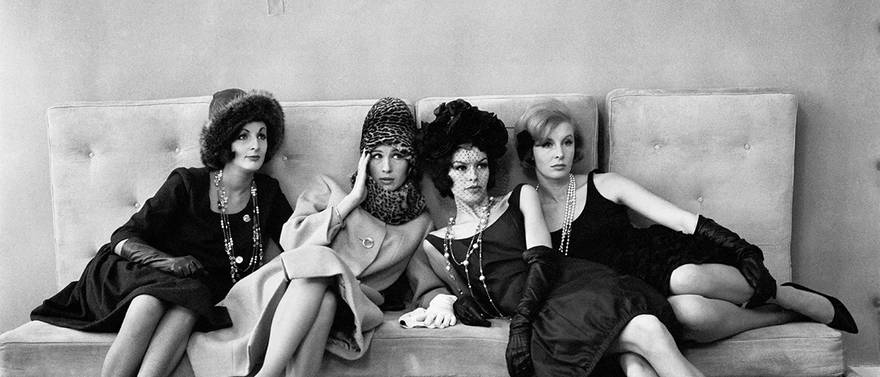
The same eye served her in reportage. In November 1956, after Soviet troops crushed the Hungarian uprising, she travelled with Ata Kandó to the Austrian border. Between 10 and 20 November they photographed refugees at the Eisenstadt reception camp, and the work became a book that year. Back in Amsterdam she photographed a fashion show by the couturier Dick Holthaus in 1961. In 1962, for a photo essay on the Dutch Reformed Church, she caught young people dancing the twist on the Amstelveld. That a portrait of a Protestant church should include the twist says a great deal: she was recording a society loosening up from within.


After 1964: how people dwell
In 1964 her life changed direction. Her relationship with Schrofer ended, and she travelled to the Tellem cliffs in Mali with the architect Herman Haan, who was studying the ancient cliff dwellings of the region. The trip opened the largest and least-known chapter of her work. Over the following years she photographed in Iraq, India, Yemen, Peru and Ethiopia, often with her colleague Sean Wellesley-Miller. She often stayed for long periods, sometimes months, among the people she photographed.
It would be easy to file these pictures under travel photography. That would miss what they are. Her subject was rapid urbanisation and social change: people moving from the countryside to the cities, and the way they inhabit, build and transform their surroundings. In Lima in 1969 she photographed children in a barriada, one of the informal settlements on the city’s edge. The images were made during a trip for PREVI, the experimental housing project that brought international architects to Peru to rethink low-cost housing. In India, between 1966 and 1970, she photographed women carrying loads along dirt paths and men at work in dim industrial spaces. In Ethiopia, the same year as Lima, she photographed a track running toward the mountains, travelled by a man and two pack animals.
Seen together, these images show the continuity of her career. The architectural photographer of the 1950s did not abandon architecture. She widened it to include the homes people make for themselves, without architects, and the lives those homes contain. She worked with a Leica, in black and white and in colour, and colour became more important after Mali. This is fieldwork as much as photography, close to anthropology in its patience. Most of it stayed in her boxes.


Why she was forgotten
A group photograph shows her with Paul Huf, Jurriaan Schrofer, Cas Oorthuys, Ata Kandó, the poet Paul Rodenko and Ed van der Elsken. She is not on the margins of that generation. She is in the frame, at its centre. Yet Oorthuys and van der Elsken became fixtures of the history of Dutch photography, and she did not. The museum itself says the recognition she received in her lifetime was insufficient.
The comparison with Vivian Maier comes up every time a forgotten archive surfaces, and here it misleads. Maier never showed her work. Cornelius published books, worked on commissions and belonged to the leading association of her time. She was not discovered; she was mislaid. Several factors probably played a part, and each says something about how photographic history gets written.
The first is gender: she worked in a milieu where women photographers were rare, and canons built after the war were built largely around men. The second is genre: much of her work was commissioned, for architects, companies and institutions, and applied photography has long ranked below “auteur” work. The third is geography: her most ambitious later work was made far from the Netherlands, in a register closer to anthropology than to the gallery. The last is the archive itself. Kept in suitcases in France, then in boxes, it could not be seen, so it could not be cited, exhibited or taught.
Violette Cornelius Rediscovered is an attempt to correct that record. The exhibition brings together more than 200 works, and the first monograph devoted to her will be published alongside it. The real test will come afterwards: whether her name now appears in the surveys, the syllabuses and the museum walls where the history of Dutch photography is told. Forty thousand negatives are a strong argument. It remains to be heard.
Grégory Herpe
| Practical information | |
|---|---|
| Exhibition | Violette Cornelius Rediscovered |
| Venue | Nederlands Fotomuseum, Rotterdam (Netherlands) |
| Dates | November 20, 2026 – February 28, 2027 |
| On show | More than 200 works + first monograph |


Leave a Reply